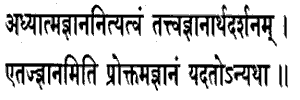
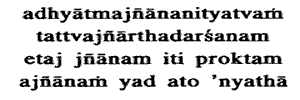
| 11. Constancy
in Selfknowledge, perception of the end of the knowledge of truth. This
is declared to be knowledge, and what is opposed to it is ignorance.Self
knowledge: knowledge of the Self and the like: Perception, etc.: Knowledge
of truth results from the mature development of such attributes as (humility
xiii.), which are the means of attaining knowledge. The end of this knowledge
is moksha, the cessation of mortal existence, of samsara. The end should
be kept in view; for, it is only when one perceives the end of the knowledge
of truth that one will endeavour to cultivate the attributes which are the
means of attaining that knowledge. These attributesfrom humility to perception
of the end of the knowledge of truthare declared to be .knowledge, because
they are conducive to knowledge. What is opposed to thisviz pride, hypocrisy,
cruelty, impatience, insincerity and the likeis ignorance, which should
be known and avoided as tending to the perpetuation of samsara.Brahman the
Knowable. What is it that has to be known by this knowledge ? In answer
to this question the Lord proceeds with xiii.12, etc. (Objection):Humility
and the like are only forms of selfcontrol (yama and myama); by them cannot
be perceived the Knowable. Never indeed have we found humility and other
attributes (mentioned above) serving to determine the nature of anything.
But in all cases, it is only the know ledge or consciousness of an object
that has been found to determine the nature of that object of knowledge.
and, certainly, no object can be determined through the knowledge of another
object, any more than fire can be perceived through the knowledge of a pot.
(.answer):This objection does not apply here ; for, we have said that humility
and the like are spoken of as knowledge because they conduce to knowledge,
or because they are secondary or auxiliary causes of knowledge. |