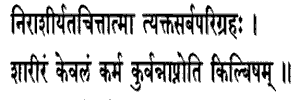
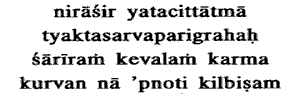
| 21. Free from
desire, with the mind and the self controlled, having relinquished all possessions
doing mere bodily action, he incurs no sin. He from whom all desires have
departed, by whom the mind and the body (the self, the external aggregate
of causes and effects) have been controlled, by whom all property has been
disowned, who does mere bodily action (action necessary for the bare existence
of the body), without attachment even for that action,he incurs no sin which
will produce evil effects. Even dharma is a sin,in the case of him who seeks
liberation; inasmuch as it causes bondage. He is liberated from both (dharma
and adharma), i.e, he is liberated from samsara.Now, what does the phrase
mere bodily action, (sarirakarma) mean ? Does it mean action which can be
performed by means of the body only ? Or does it mean action required for
the bare existence of the body?One may ask: What is the good of this enquiry
?What if bodily action means action done by means of the body, or action
necessary for the bare existence of the body?We reply as follows:Firstly:If
mere bodily action means action which can be performed by means of the body
only, the words would imply that even he who, by means of the body, does
an unlawful action productive of some visible or invisible results, incurs
no sin. Then this teaching would contradict the teaching of the sastra.
And to say that he who does by means of the body a lawful action productive
of some visible or invisible results incurs no sin is to deny something
which even the opponent would never advance. Moreover, the qualifications
doing bodily action and mere would imply that sin accrues to him who in
speech or thought performs actions enjoined or prohibited by the sastra,
respectively called dharma and adharma. |