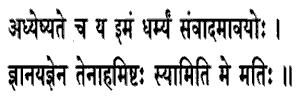
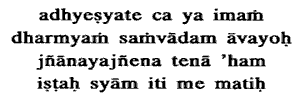
| 70. And he who
will study this sacred dialogue of ours, by him I shall have been worshipped
by the sacrifice of wisdom, I deem. Dialogue: this work which is in the form
of a dialogue. Of the four kinds of sacrifice such as vidhi or ritual, japa
or a loud prayer, upamsu or a prayer uttered in a low voice, manasa or a prayer
offered with the mind, the jnanayajna or wisdomsacrifice comes under the head
of manasa and is therefore the highest. Thus the Gitasastra is extolled as
a Or, we may regard this passage as revealing what the real effect (of the
act enjoined here) is, viz that the act will produce an effect equal to that
of wisdomsacrifice, of the contemplation of a Devata or the like. The merit
of hearing the Doctrine:The benefit accruing to the hearer is stated as follows:
And the man also who hears, full of faith and free from malice even he, liberated,
shall attain to the happy worlds of the righteous,Even he: much more so he
who understands the doctrine. Liberated: from sin. The righteous: those who
have performed Agnihotra or such other sacrifices. The Lord assured by Arjuna
of his grasp of the Teaching. The Lord now asks with a desire to know whether
the pupil has understood or not the teaching of the sastra, the object of the
question being that He might make the pupil understand the teaching by some
other means, if the latter be found to have not understood it. And this is
to show that it is the duty of the teacher to try again to make the pupil understand
the teaching and enable him to attain his object, |