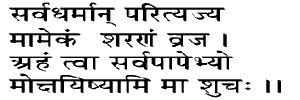
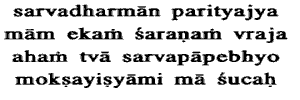
| 66. Abandoning
all righteous deeds, seek me as thy sole Refuge ; I will liberate thee from
all sins ; do thou not grieve. Righteous deeds (dharma) ; including unrighteous
deeds (adharma) also, since naishkarmya or freedom from all action is intended
to be taught here. Here may be cited such passages of the sruti and the smriti
as the following Not he who has not abstained from evil deed .can attain It.(KathaUp.
1224),abandon dharma and adharma So, the passage means renouncing all works.
Me alone ; the Isvara, the Self of all, dwelling the same in all. Seek Me as
thy sole Refuge: in the belief I myself am that Isvara ; i e, do thou understand
that there is naught else except Me. When thou art firm in this faith, I shall
liberate thee from all sins, from all bonds of dharma and adharma, by manifesting
Myself as thy own Self. So it has been already said here, I destroy the darkness
born of ignorance by the luminous lamp of wisdom, abiding in their self.(x.
11.)Wherefore do thou not grieve. What is the means to the Highest Bliss,knowledge
or Works?This(Which has been taught) to thee is never to be taught to one who
is devoid of austerities, nor to one who is not devoted, nor to one who does
not do service, nor to one who speaks ill of Me. This sastra has been taught
to you by:Me for your good, for the destruction of samsara. Not devoted: without
devotion to the Guru and to the Deva. Never: under no circumstances ,whatever.
It should not be declared to him who, devoted and full of austerities as he
may be, renders no service. One speaks ill of Me: he who looks upon Me, Vasudeva,
as an ordinary man, and who in his ignorance declares Me guilty of selfadulation
and does not like to be told that I am the Isvara. He, too, is not fit ; and
the sastra should not be taught to him. |